Put Down the Mom Guilt: Here's What the Research Actually Says About Kids and Peppa Pig
It happens to almost every parent. You've had a long morning, the laundry is staging a revolt, and your toddler has asked you to read The Very Hungry Caterpillar approximately fourteen times before 9 a.m. So you flip on Peppa Pig, hand over a snack cup, and exhale — only to immediately feel that familiar twist of guilt. Am I doing this wrong? Is this too much screen time?
Here at Peppa Pig & Me, we get it. We also think it's time to have an honest, grounded conversation about what screen time actually means for young kids — and why not all TV watching is created equal.
The "Screen Time" Conversation Has Evolved
For years, pediatric guidance leaned heavily toward strict limits: no screens before age two, one hour max for toddlers, and a general undercurrent of TV is bad, full stop. The American Academy of Pediatrics (AAP) even issued a blanket "no screens under two" recommendation back in 1999.
But research and real-world parenting have pushed that conversation forward in meaningful ways. In 2016, the AAP updated its guidance to acknowledge that not all screen time is equivalent. Video chatting with Grandma in Ohio? That's interactive and relationship-building. Passively watching low-quality, fast-paced content? That's a different story. The quality of what your child is watching matters just as much — arguably more — than the clock on the wall.
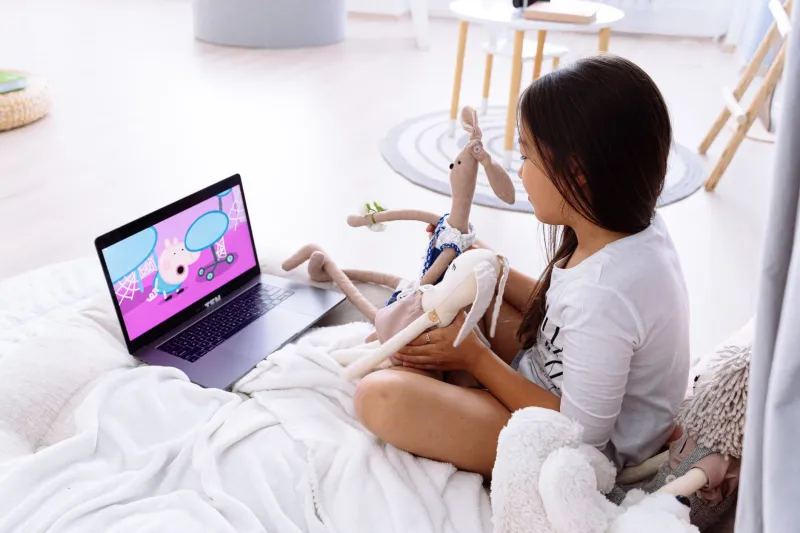
Shows like Peppa Pig, which are designed with deliberate pacing, relatable storylines, and age-appropriate vocabulary, fall firmly into the "quality content" category. That distinction is worth holding onto.
What the Numbers Actually Look Like by Age
Let's get practical for a second, because vague guidelines don't help anyone at 7:30 a.m.
Under 18 months: The AAP recommends avoiding screen media other than video chatting. If you're in this phase and occasionally flipping on Peppa while you try to eat a meal, you're human — just try not to make it a daily centerpiece.
18 to 24 months: This is a transition window. If you want to introduce some content, watch with your child and help them connect what they're seeing to the real world. "Look, Peppa's jumping in puddles — remember when we did that at the park?"
Ages 2 to 5: The AAP suggests limiting to about one hour per day of high-quality programming. Peppa Pig episodes run roughly five minutes each, which means a handful of episodes fits comfortably within that window. The key phrase here is high-quality — and research from outlets like Common Sense Media consistently rates Peppa Pig well for this age group.
Ages 6 and up: Consistent limits still matter, but the emphasis shifts toward balance — making sure screens don't crowd out sleep, physical activity, homework, and face-to-face connection.
None of these are meant to be rigid rules that make you feel like a failure if your sick kid watches three episodes in a row on a Wednesday. They're guidelines, not verdicts.
Quality Over Quantity: Why Peppa Actually Earns Her Place
What makes Peppa Pig a solid choice isn't just that kids love her (though they really, really do). It's that the show is built around the kind of content that supports development rather than just occupying eyeballs.
Each episode centers on everyday family life — going to the grocery store, visiting Grandpa Pig's garden, figuring out how to share with little brother George. These aren't high-stakes plots with flashing lights and rapid-fire scene changes. They're slow, warm, and rooted in experiences your child already has or is about to have.
Research on children's media consistently shows that slower-paced, narrative-driven programming is better for executive function development than fast-cutting, action-heavy content. A 2011 study published in Pediatrics found that preschoolers who watched fast-paced cartoons showed decreased attention and impulse control compared to kids who watched educational programming or did no screen time. Peppa's gentle rhythm is genuinely a feature, not a bug.
Reframing the Babysitter Narrative
Here's where things get a little more personal. A big source of screen time guilt for parents is the feeling that using TV = checking out of parenting. But that framing is both unfair and inaccurate.
Using Peppa Pig strategically — while you make dinner, during a long car ride, or as part of a wind-down routine — is not the same as plopping your kid in front of a screen indefinitely with zero engagement. You're making a choice that allows you to function, which in turn makes you a better, more present parent the rest of the time.
And here's the real magic: Peppa Pig is one of the easiest shows to watch together when you do have the bandwidth. The episodes are short, the humor works for adults too (Daddy Pig's lovable cluelessness is genuinely funny), and the topics give you natural conversation starters. "Why do you think George was upset? What would you have done?" Suddenly a five-minute episode becomes a mini lesson in empathy.
That's not babysitting. That's intentional parenting with a helpful tool.
A Simple Framework for Confident Viewing Choices
If you want a practical way to feel good about how Peppa fits into your family's routine, try running your viewing choices through these three questions:
- Is the content age-appropriate and paced well? Peppa checks both boxes for the 2–6 set.
- Is screen time replacing something important, or filling a natural gap? There's a big difference between skipping outdoor play every day and turning on the TV during the baby's nap.
- Am I engaging with my child around the content sometimes? Even a few minutes of co-viewing or post-episode conversation makes a meaningful difference.
If you can answer those honestly and feel okay about what you see, you're doing fine. Really.
You're the Expert on Your Kid
At the end of the day, no pediatric guideline or parenting article (including this one) knows your child the way you do. Some kids get overstimulated after two episodes; others watch a few and then run off to play pretend Peppa for an hour. Pay attention to your kid's cues, not just the clock.
The goal was never zero screens. It was always raising curious, connected, emotionally healthy kids. And if a little pig in a red dress helps you get there? We're here for it.