More Than Muddy Boots: How Peppa Pig's Emotional Journey Mirrors Your Child's Growing Up
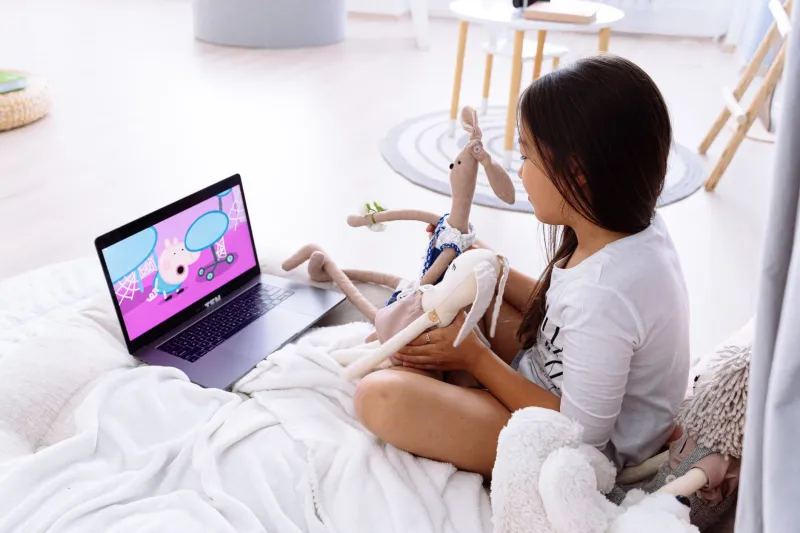
Let me say something that might surprise you: Peppa Pig is not a perfect child. She whines sometimes. She gets jealous. She occasionally insists she's right when she's very, very wrong. And that, honestly, is exactly why she resonates so deeply with young kids across the country — and why her show is worth taking a little more seriously than its cheerful theme song might suggest.
As parents, we spend a lot of energy tracking our children's physical milestones — first steps, first words, first day of kindergarten. But emotional development is trickier to measure and easier to overlook. What if one of the best mirrors for that growth was already playing on your TV?
Peppa Starts Where Your Kid Starts
In the earliest episodes of the series, Peppa is four years old and thoroughly convinced that the world revolves around her. Sound familiar? She wants to win every game, hates being told she's wrong, and has a particular flair for the dramatic when things don't go her way. She is, in other words, a completely normal preschooler.
Child development experts describe this stage as egocentric thinking — a term coined by psychologist Jean Piaget to describe the way young children genuinely struggle to see the world from another person's perspective. It's not selfishness in the moral sense. It's just where their brains are. Peppa's early behavior is a near-perfect illustration of this concept, and watching her navigate it can help parents recognize the same patterns in their own kids without frustration.
When your four-year-old insists that their drawing is the best one at preschool, they're not being bratty. They're being developmentally appropriate. Peppa gets it.
The Sibling Dynamic: George Is Doing a Lot of Heavy Lifting
If you have more than one child, you already know that sibling relationships are basically a full-time graduate course in emotional regulation. The push and pull between Peppa and her little brother George is one of the show's richest ongoing storylines, and it's worth paying attention to.
George can't speak in full sentences. He cries easily. He adores dinosaurs to a degree that borders on obsessive. And Peppa? She loves him fiercely, bosses him around constantly, and occasionally has to be reminded — by Mummy Pig, by Daddy Pig, by circumstances — to consider his feelings.
This arc plays out in small, real ways throughout the series. In episodes where George is upset and Peppa initially dismisses him, we often see her circle back, soften, and find a way to include him. That progression — from irritation to empathy — is exactly what we hope to see in our own kids as they develop what researchers call perspective-taking ability, the capacity to understand that other people have feelings and needs that are separate from their own.
For parents of kids who are working through similar sibling dynamics, pointing to Peppa's moments of growth can be a gentle, low-stakes way to open a conversation. "Remember when Peppa figured out that George was sad? What do you think helped her understand that?"
Meltdowns, Mistakes, and Moving On
One of the things I appreciate most about Peppa Pig — and I'll admit I've watched enough episodes to have opinions — is that the show doesn't pretend that kids always handle things gracefully. Peppa loses her temper. She sulks. She sometimes says things that aren't kind and then has to navigate the awkward aftermath.
But crucially, the show almost always follows those moments with resolution. Not a tidy, unrealistic resolution where everyone's magically fine in thirty seconds, but a genuine working-through. An apology. A hug. A conversation with Mummy Pig that reframes what happened without shaming Peppa for having felt what she felt.
This is emotional resilience modeling, and it's genuinely valuable. Kids don't learn to manage big feelings by being told not to have them. They learn by watching what comes after the feeling — and Peppa consistently shows them a path through.
For parents, this is a useful framework. When your child has a meltdown at Target over the wrong flavor of fruit snacks, the goal isn't to eliminate the emotion. It's to help them find the other side of it. Peppa's episodes, in their small, five-minute windows, show that process over and over again.
Growing Up Without Losing the Joy
Here's where I want to offer a slightly more personal take: one of the most emotionally sophisticated things about Peppa Pig is that growing up in the show doesn't mean becoming less playful. Peppa gets better at sharing, at problem-solving, at considering other people's feelings — but she never stops jumping in muddy puddles with complete abandon.
That's actually a pretty profound message for kids, and for parents too. Emotional growth doesn't require your child to become a mini-adult. It just means they get a little better, episode by episode, at navigating the messy, wonderful, complicated business of being a person.
As your own child moves through these stages — the tantrums, the jealousy, the first real acts of generosity and empathy — it can help to have a framework for recognizing what you're seeing. Not every breakthrough looks like a breakthrough. Sometimes it looks like your kid pausing before snatching a toy, or coming to tell you that their sibling is crying. Small moments. Real growth.
How to Use Peppa as a Conversation Springboard
If you want to make the most of what Peppa Pig offers developmentally, here are a few easy ways to engage your child around the emotional content of the show:
- Name what Peppa is feeling. "She looks frustrated right now, doesn't she? Have you ever felt like that?" Building an emotional vocabulary is one of the most important things you can do for a young child.
- Ask predictive questions. Before the resolution of an episode, pause and ask: "What do you think Peppa should do?" This builds problem-solving thinking in a low-pressure context.
- Celebrate parallel moments. When your child does something that mirrors Peppa's growth — shares without being asked, apologizes sincerely — connect it. "That was just like when Peppa figured out how to help George. That was really kind."
- Let them identify with the imperfect parts too. If your child says "I was like Peppa when she got mad," that's not a red flag — that's self-awareness developing in real time. Celebrate it.
The Bigger Picture
Peppa Pig is, at its core, a show about a family figuring things out together — with humor, with warmth, and with a refreshing willingness to let kids be kids, including all the messy emotional parts that come with that. For parents paying attention, it's also a surprisingly rich map of early childhood emotional development.
Your child won't grow up all at once. Neither did Peppa. But episode by episode, season by season, both of them are getting there — and that's something worth celebrating, muddy boots and all.