Why Peppa Pig Teaches Kids More Than You Ever Could (And That's Actually Great News)
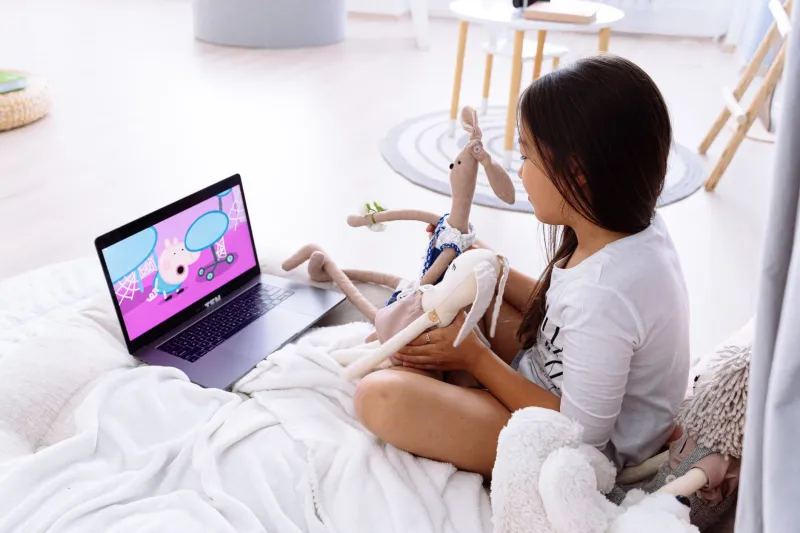
The Moment Every Parent Has Experienced
You've told your child to share their toys approximately four hundred times. You've explained it calmly, you've explained it firmly, you've explained it while desperately trying to keep the peace between two small humans who both want the same plastic dinosaur. Nothing sticks.
Then one afternoon, Peppa Pig shares something on TV, and your child turns to their sibling and says, "We should share like Peppa."
If this has happened to you, first of all — you're not alone. Second of all — this is not a personal failure. It is, in fact, a completely predictable result of how children's brains are wired to learn. And once you understand why it happens, you can stop feeling vaguely upstaged by a cartoon pig and start using it as one of the most effective parenting tools you have.
The Psychology Behind the Peppa Effect
Children, especially those in the toddler and preschool years, are in a stage of development where they're highly resistant to direct instruction — particularly from the people they're most emotionally entangled with. That's you, the parent. When Mom or Dad says "you need to share," the message arrives wrapped in the full complexity of your relationship: power dynamics, recent conflicts, the emotional weight of authority. Even when you're being completely gentle, there's an inherent push-and-pull.
Animated characters don't carry any of that baggage. Peppa is a peer, not an authority figure. She makes mistakes, she gets frustrated, she sometimes doesn't want to share either — and then she figures it out. Kids watch that process and absorb it without their defenses going up. Developmental psychologists call this "observational learning," and it's one of the most powerful ways young children acquire behavior.
There's also something called "parasocial relationships" at play. Even very young children form genuine emotional bonds with characters they watch regularly. Peppa feels like a friend. And we are, all of us, more receptive to lessons that come from people we like and identify with than from people who are telling us what to do.
What Peppa Does Differently
Not every animated show is equally effective at this. What makes Peppa Pig particularly good at delivering life lessons without kids noticing they're being taught?
The mistakes are relatable, not cautionary. Peppa doesn't serve as a cautionary tale. She's not punished dramatically for her errors. She just... messes up, feels the natural consequences, and adjusts. That's a much more realistic and digestible model of behavior change than the morality-play format some children's shows use.
The emotions are named out loud. Throughout the series, characters regularly say things like "I feel left out" or "I'm frustrated" or "I was wrong and I'm sorry." For kids who are still building their emotional vocabulary, hearing these phrases in low-stakes, entertaining contexts is genuinely instructive. It gives them language for feelings they're already having but can't articulate.
The resolutions are realistic. When Peppa and Suzy Sheep have a fight, they don't instantly make up with a hug and a lesson-learned speech. There's awkwardness. There's a little stubbornness. And then they find their way back to each other. That feels true, and kids recognize it as true.
A Few Episodes Worth Watching With Intention
If you want to be a little more deliberate about using the show as a teaching tool, a handful of episodes are particularly rich with material worth discussing afterward.
"Best Friend" — Peppa and Suzy Sheep navigate jealousy and the fear of being replaced. It's a surprisingly nuanced look at friendship insecurity that opens up great conversation about what it means to have more than one friend.
"Peppa's Painting" — This one touches on perfectionism and the fear of not being good enough. When Peppa's painting doesn't look the way she wanted, watching how she handles that disappointment gives you a natural opening to talk about effort versus outcome.
"Daddy Pig's Office" — An underrated episode about how adults handle work stress and the importance of honesty. Daddy Pig gets a little turned around (as he often does) and has to ask for help. A great episode for talking about how it's okay not to know everything.
"The Playground" — This episode deals directly with exclusion and how to handle it when someone doesn't want to play with you. It's incredibly useful for kids navigating preschool social dynamics.
How to Reinforce the Lessons at Home
Here's where you get to be the thoughtful parent who makes the magic land. The key is to reference Peppa after the behavior, not as a command before it.
Instead of: "Remember how Peppa shared? You should share like Peppa." (This puts kids on the defensive.)
Try: After your child shares something spontaneously, say, "Hey, you shared just like Peppa did in that episode! That was really kind." Connecting a positive behavior they just did to a character they love reinforces it in the most natural way possible.
You can also use Peppa as a neutral third party when conflict arises. "What do you think Peppa would do if this happened to her?" takes the pressure off your child to perform the right answer and turns it into a collaborative, imaginative exercise instead.
Stop Fighting the Cartoon — Join Forces With It
There's a tendency among parents to feel a little competitive with children's media — like we should be the primary source of our kids' moral education, and anything the TV teaches them is somehow a shortcut we should feel conflicted about. But that framing isn't particularly useful.
The truth is, children have always learned from stories. Before television, it was fables and fairy tales and the stories told around the dinner table. Peppa Pig is just the current version of that ancient tradition — a story about characters navigating the same emotional terrain your child is navigating, told in a way that's perfectly calibrated to their developmental level.
Your job isn't to compete with Peppa. It's to be the person who helps your child take what they saw on screen and connect it to their real life. That's a job only you can do — and honestly, it's the more important one.
So the next time your kid quotes Peppa Pig at you, don't roll your eyes. Take notes.