Daddy Pig Knows Best: How Peppa's Bedtime Routines Are Quietly Transforming Nights in American Homes
The Moment You Realized Peppa Was in Your Bedroom
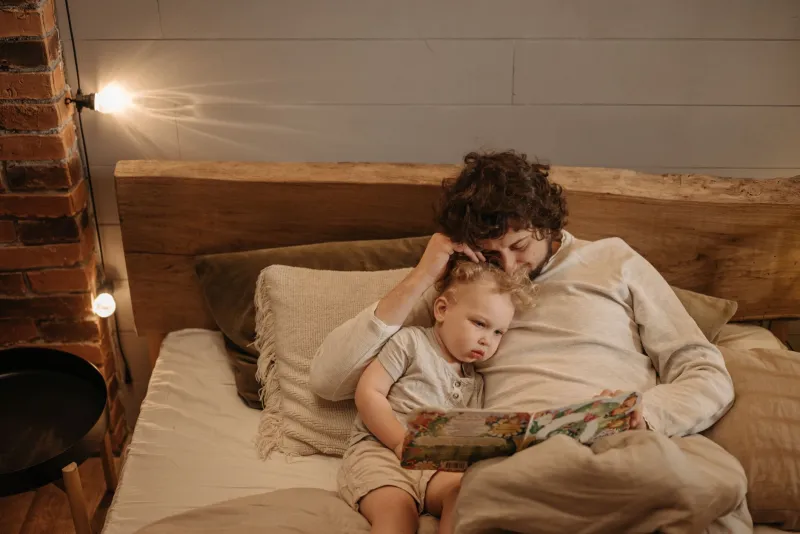
It probably started small. Maybe your four-year-old asked you to sit in the armchair "like Daddy Pig" before lights out. Maybe they started requesting warm milk they'd never touched before, or suddenly insisted on a story told in a slow, sleepy voice. Whatever the version in your house, there's a good chance Peppa Pig had something to do with it.
This isn't a complaint — it's actually kind of fascinating. Peppa's world is full of gentle, repetitive bedtime rituals, and kids are soaking those up like little sponges. The show doesn't just entertain; it models. And when it comes to sleep, that modeling might be one of the most useful things happening on your television screen.
Why Bedtime Is Such a Big Deal (And Such a Battle)
For most American families with kids under six, bedtime is... a lot. The American Academy of Sleep Medicine estimates that somewhere between 25 and 50 percent of young children experience some form of bedtime resistance. That's not a parenting failure — that's just toddler biology colliding with the end of a very stimulating day.
Kids at this age don't naturally downshift. Their brains are still buzzing from everything they've seen, touched, argued about, and discovered. The concept of "winding down" is genuinely foreign to them, which is why so many parents spend 45 minutes negotiating over one more glass of water.
Here's where routine-modeling in children's media comes in — and where Peppa quietly earns her keep.
What Peppa's Bedtime Actually Looks Like
If you've watched enough episodes (and at this point, you probably have), you know the drill. The Pig family wraps up the day with a kind of unhurried ease that feels almost aspirational. There's usually a story. There's Daddy Pig's low, reassuring voice. There's a sense that the whole house is settling, not just the kids.
These scenes aren't accidental. Children's media researchers have long noted that shows aimed at the preschool set tend to embed routine sequences deliberately — partly because predictability is developmentally appropriate, and partly because it models behavior kids are expected to perform themselves.
Daddy Pig, in particular, is a quietly brilliant character in this context. He's relaxed without being checked out. He participates in the wind-down without making it a performance. He's not rushing. For a generation of American kids watching this, that calm, present energy registers — and they start to want it replicated at home.
The Psychology Behind Routine-Modeling
Children learn an enormous amount through observation. Developmental psychologists call this "vicarious learning" — essentially, watching someone else do something and internalizing it as a template for behavior. It's why your kid suddenly started saying "Oh dear!" (thanks, Peppa) or pretending to snort like a pig at the dinner table.
But it also applies to routines. When kids see a familiar, beloved character engaging in a specific sequence of behaviors — bath, story, lights out, maybe a little stargazing through the window — they begin to associate that sequence with comfort and safety. It becomes a kind of emotional blueprint.
The repetition in Peppa's storytelling format reinforces this even further. Because the show follows such a consistent structure, kids develop a sense of narrative expectation. And that expectation? It transfers. They start to want their own evenings to follow a satisfying arc, too.
Harnessing the Peppa Effect at Home
So how do you actually use this to your advantage? The good news is you don't need to overhaul your whole evening. Small, intentional shifts can make a real difference — especially if you frame them in language your kid already understands.
Lean into the language. If your child has been watching Peppa, they already have a mental picture of what "bedtime" looks like in that world. You can borrow from that. "Let's do our wind-down like the Pig family" is a surprisingly effective prompt for a lot of kids who'd otherwise dig their heels in at the first mention of pajamas.
Create a visual routine chart. Peppa's bedtime follows a sequence, and your child's brain is already primed to appreciate sequences. A simple chart — bath, brush teeth, story, lights out — gives kids the same sense of predictability the show provides. Bonus points if it has a pig on it.
Slow your own energy down first. This is the Daddy Pig move, and it's harder than it sounds. When you lower your voice, move more slowly, and stop multitasking during the bedtime window, kids pick up on it. You're not just managing their behavior — you're modeling the emotional state you want them to reach.
Use a consistent "wind-down" episode. Some parents have found success using one specific, calm Peppa episode as part of the bedtime sequence — not as a reward, but as a transition tool. A familiar, low-stakes episode can help a wired kid shift gears before screens go off entirely. Just keep it the same episode so it becomes part of the ritual rather than an exciting new thing to stay awake for.
Let them lead the story. Daddy Pig often lets the kids drive the narrative a little — asking questions, encouraging imagination. Try doing the same at bedtime. Ask your child to tell you what happened in their day, or what they'd do if they lived in Peppa's world. It keeps them engaged while naturally winding down the energy.
When the Magic Doesn't Work (And That's Okay)
Let's be honest: no show, no routine chart, and no amount of Daddy Pig energy is going to make every bedtime smooth. Kids get overstimulated, overtired, and sometimes just contrary for no discernible reason. The goal isn't a perfect night — it's a consistent enough framework that most nights feel manageable.
If your child is deeply resistant to bedtime despite a solid routine, it's worth talking to your pediatrician. Sometimes there are sensory, anxiety, or sleep-related factors at play that go beyond what any TV show can address. But for the average preschooler who's just pushing boundaries? Routine, repetition, and a little borrowed magic from Peppa's living room go a long way.
The Unexpected Gift of a Pig in Pajamas
Nobody sits down to watch Peppa Pig thinking, "This is going to help my kid sleep." But that's kind of the beauty of it. The show isn't trying to be a parenting tool — it's just being a warm, consistent, gently paced world that kids find deeply comforting.
And somewhere in all those cozy episodes, your child picked up a picture of what bedtime is supposed to feel like. Calm. Connected. A little bit funny, maybe. And finished with a snort.
As far as parenting allies go, you could do a lot worse than a cheerful pink pig who's already asleep by the end of the episode.