Why Your Kid Is Laughing at Things You Didn't Expect — And How Peppa Pig Is Behind It
Somewhere around age four, something shifts. Your child stops laughing only at physical slapstick — the dropped ice cream, the pratfall, the silly sound effect — and starts giggling at things that are, well, actually kind of witty. They catch a pun. They notice when something is absurd in a specific, pointed way. They look at you to see if you got the joke too.
If your household has been logging some serious Peppa Pig hours, that shift might not be a coincidence.
Comedy Is a Cognitive Workout
Humor isn't just entertainment — it's one of the more sophisticated cognitive operations a young brain performs. To find something funny, you have to hold two conflicting ideas in your head at the same time, recognize the gap between expectation and reality, and process that gap fast enough to laugh before the moment passes.
Developmental psychologist Paul McGhee, who spent decades studying children's humor, identified a clear progression in how kids understand comedy. Around age 3-4, children begin moving beyond purely physical jokes into incongruity-based humor — finding things funny because they're wrong in an interesting way. A dog driving a car. A grown-up who can't read a map. A daddy who falls into every mud puddle he walks past.
That last one, of course, is basically Daddy Pig's entire character arc.
What makes Peppa Pig particularly interesting from a developmental standpoint is that it operates at multiple comedic registers simultaneously. There's the broad, accessible stuff for the youngest viewers — funny voices, silly situations, Peppa's snort-laugh. And then there's something else running underneath it, aimed squarely at the adults in the room but often absorbed by older preschoolers without anyone quite noticing.
The Layers in the Laughs
British children's television has a long tradition of writing comedy that works on two levels at once — think of it as the Shrek model applied to a much gentler, muddier universe. Peppa Pig does this consistently and cleverly.
Take Daddy Pig. He's portrayed as lovably overconfident — an expert in everything, competent at nothing. That's a joke that lands differently depending on who's watching. A 4-year-old finds it funny because a grown-up is bad at things (pure incongruity). A parent finds it funny because it's a gentle, affectionate parody of a specific kind of husband-and-father energy they may recognize from their own living room.
Or consider the show's running gag about Grandpa Pig's model trains. On the surface, it's just a funny old man with a hobby. But there's a dry, understated quality to how his obsession is treated — acknowledged, indulged, never fully explained — that reads like something out of a British sitcom for adults.
Then there's the wordplay. Peppa Pig is full of it. Character names that are puns (Pedro Pony, Suzy Sheep, Dr. Brown Bear), episode titles with double meanings, and dialogue that occasionally slips in a turn of phrase that makes parents look up from their phones.
All of this is building something in your child's brain.
What Humor Does for Developing Minds
Researchers at institutions including MIT and the University of Cambridge have studied the relationship between humor comprehension and broader cognitive development in young children. The findings are pretty consistent: kids who develop a sophisticated sense of humor early tend to show stronger cognitive flexibility — the ability to shift between different ways of thinking about the same problem.
That's a significant skill. Cognitive flexibility underlies creativity, problem-solving, and even emotional resilience. When a child learns to find something funny because it's wrong in an unexpected way, they're practicing the mental move of seeing a situation from multiple angles at once.
Language development is another piece of this. Puns and wordplay require a child to hold two meanings of the same word in working memory simultaneously — which is genuinely hard, and genuinely good for developing vocabulary and verbal reasoning. When Peppa misunderstands a phrase and the joke hinges on that misunderstanding, kids who catch it have just done a small but real piece of linguistic work.
How to Watch Funny Together (And Why It Matters)
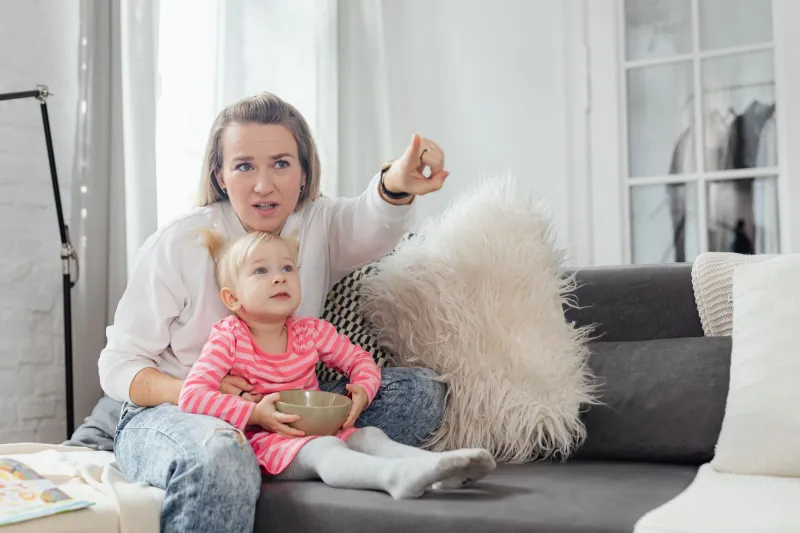
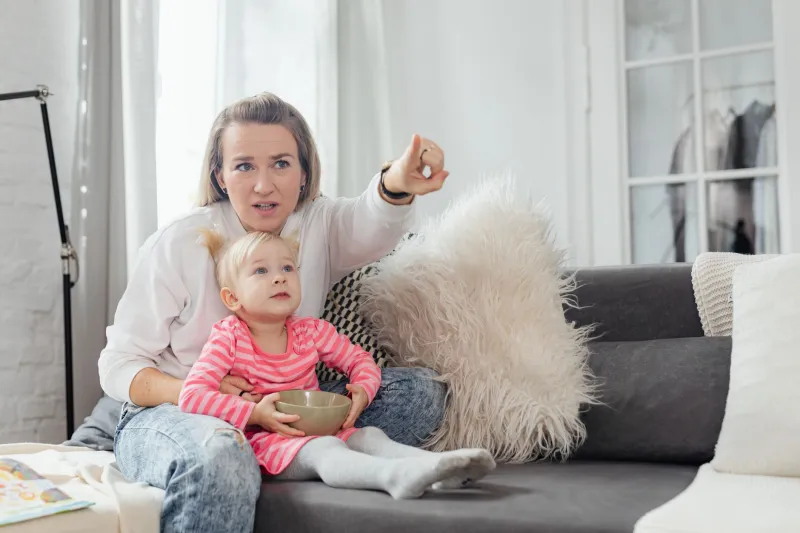
Here's where it gets practical. The benefits of humor-rich content like Peppa Pig are amplified significantly when parents watch alongside their kids and engage with the comedy as it happens. This isn't just about bonding — though that's real and valuable — it's about helping your child develop a shared language of humor that extends far beyond any single show.
A few approaches that work well:
Name the funny thing out loud. When something makes you laugh, say why. "Did you notice Daddy Pig was sure he knew where the treasure was, and then he was completely wrong? That's what made it funny." You're essentially teaching comedic analysis to a preschooler, and they eat it up.
Ask what made them laugh. After a funny scene, try: "What was the funniest part of that?" You'll get surprising answers. Kids often catch things you missed, or find the humor in a completely different element than you did. That conversation is where the real cognitive work happens.
Bring the jokes into regular life. One of the best things about a shared media experience is the shorthand it creates. If Daddy Pig's overconfidence about directions becomes a family reference point — "Are you being a Daddy Pig about this?" — you've created a humor vocabulary that travels. Inside jokes are a form of family culture, and they start somewhere.
Don't explain the joke to death. There's a balance here. Pointing out what's funny is useful; dissecting it until it's clinical is not. If a joke lands, let it land. Save the analysis for after the giggles.
Building a Family Sense of Humor
Every family develops its own comedic sensibility over time — the things you find funny together, the recurring bits, the references only you understand. That shared humor is actually a meaningful part of family identity and emotional connection. Researchers who study family communication consistently find that humor is one of the primary ways families signal belonging and safety to their children.
Peppa Pig, with its layered comedy and gentle absurdism, is a genuinely good starting point for that process. It's funny in ways that grow with your child — the jokes that sailed over their head at 3 will land at 5, and the ones that land at 5 will mean something different at 7.
So the next time your kid loses it over Daddy Pig confidently reading the map upside down, or dissolves into giggles at one of Peppa's more elaborate misunderstandings, lean in. Ask what's funny. Share what you thought was funny. Let it become a moment between the two of you.
That little laugh track you're building together? It'll play for years.