Is Your Youngest Suddenly Acting Like George Pig? Here's the Psychology Behind It
You probably didn't see it coming. One week your toddler was just... your toddler. The next, they're dragging a plastic dinosaur everywhere, saying "Dine-saw!" with genuine conviction, and dissolving into theatrical tears when something doesn't go their way. Sound familiar? Welcome to what parents around here have started calling the George Effect.
For the uninitiated, George Pig is Peppa's younger brother — a cheerful, wide-eyed little guy who worships his dino toy, communicates in simple phrases, and navigates a world that's always just slightly too big for him. He's sweet, he's relatable, and apparently, he's become a blueprint for younger siblings across America.
This isn't just a cute quirk. There's real developmental psychology at work here, and understanding it can genuinely shift how you manage sibling relationships at home.
Why Younger Kids Latch Onto George Specifically
Here's the thing about George Pig: he's not just a side character. He's a younger sibling who gets to be in the story. He goes on adventures, he has feelings that matter, and even when Peppa teases him (which she does, let's be honest), he still belongs. For a two- or three-year-old watching from the couch, that's powerful stuff.
Developmentally speaking, young children use media characters as social mirrors. They look at a screen and ask — without knowing they're asking — is there someone here who looks like my life? George answers that question with a resounding yes. He's small. He's learning. He sometimes cries. He loves one specific thing with his whole heart. He is, in many ways, the perfect cartoon representation of early toddlerhood.
Psychologists call this process parasocial identification — forming a one-sided emotional bond with a character that feels genuinely mutual to the child. When your youngest watches George navigate life as the littler sibling, they're not just being entertained. They're processing their own place in the family.
The Birth Order Blueprint Playing Out on Your Couch
Birth order research has fascinated psychologists for decades, and while it's not destiny, patterns do emerge. Younger siblings tend to develop strong observational skills — they learn by watching older siblings and often become skilled at reading social situations. They also tend to be more emotionally expressive, partly because they've grown up in a house where someone else already set the rules.
George embodies this almost too perfectly. He watches Peppa. He follows Peppa. He occasionally imitates Peppa. And when he has his own moment — when he figures something out or shows unexpected bravery — it lands harder because we've watched him struggle first.
Your child, sitting there in their dinosaur pajamas, is absorbing all of this. They're not just mimicking George's speech patterns or his attachment to Mr. Dinosaur. They're internalizing a narrative about what it means to be the younger one — and crucially, that it's okay. That being small and still learning doesn't mean being left out.
When the George Phase Gets Complicated
Now, let's keep it real. Not every George behavior is something you want to encourage indefinitely. The meltdowns? The one-word communication when your kid is perfectly capable of full sentences? The refusal to try anything new without an older sibling present? These can become patterns if they're left unchecked.
The tricky part is that some of this regression is totally normal and even healthy. Young children often temporarily "shrink" their behavior when they're processing big feelings or adjusting to changes in the family dynamic. If your youngest started acting more George-like right around the time their older sibling started kindergarten, that's not coincidence — that's a kid working through something.
But if the George persona is being used as a way to avoid challenges, stay dependent, or get extra attention through helplessness, it's worth gently redirecting.
Strategies for Channeling the George Admiration Into Something Great
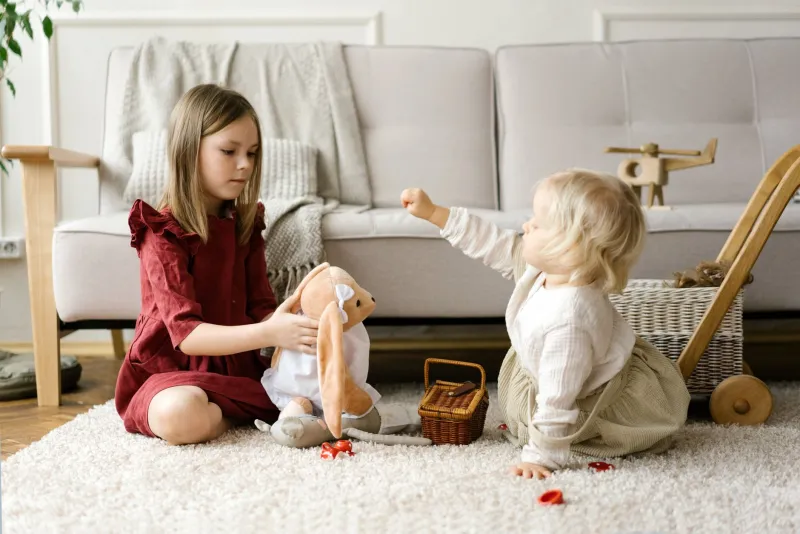
Let the older sibling be a gentle guide, not a boss. One of the sweetest dynamics in the show is when Peppa actually helps George rather than just tolerating him. You can encourage this at home by giving your older child low-stakes opportunities to teach the younger one something — a simple game, a craft, how to pour cereal. It builds the older child's confidence and gives the younger one a reason to look up to their sibling in a healthy way.
Use George's brave moments as conversation starters. There are episodes where George does something scary or tries something new, and it's worth pausing and pointing that out. "Did you see how George tried the slide even though he was nervous? What do you think about that?" You're reinforcing that the character they admire isn't just sweet — he's also capable.
Validate the George feelings without cementing the George identity. When your toddler cries because something is hard, you can absolutely empathize ("I know, that feels really frustrating") without leaning into the helpless-younger-sibling narrative. The goal is for them to feel seen, not to have their limitations become their whole personality.
Create space for your youngest to be the "big one" sometimes. Even if your child is the youngest in the family, they can be the older one to a pet, a baby doll, or a younger kid at the playground. Giving them a chance to lead — even in pretend play — helps them build an identity that isn't entirely defined by who they are relative to their sibling.
What George Actually Gets Right
Here's something worth sitting with: George Pig is a genuinely good model in a lot of ways. He's enthusiastic. He loves freely and without embarrassment. He keeps showing up even when things are hard. He has a thing — his dinosaur — that is entirely and completely his own.
If your youngest is channeling George, they might actually be onto something. Passion, persistence, and a willingness to be openly emotional? Those are qualities worth nurturing, not correcting.
The goal isn't to move your child away from identifying with George — it's to help them grow through that identification, the same way George himself grows across episodes from a toddler who mostly reacts into a kid who starts to act.
The Bigger Picture for Your Family
Sibling dynamics are shaped by a thousand tiny moments — who got the window seat, who got blamed for the broken vase, who got to stay up late. But they're also shaped by the stories children absorb about what siblings are supposed to be to each other.
Peppa Pig, for all its muddy boots and British vocabulary, tells a story about siblings who genuinely like each other. They tease, they compete, they occasionally drive each other up the wall. But they also show up. They play together. They're on the same team.
If your youngest has found a little piece of themselves in George, that's not something to manage away. That's something to build on — one dinosaur roar at a time.